
Soot Removal · Odor Neutralization · HVAC Decontamination
Smoke Damage Cleanup
Bringing Your Home Back to Life.
You don't need a house fire to have smoke damage. A kitchen flare-up, a furnace puffback, or a fire two doors down can contaminate every room you own. CPR identifies the residue type, cleans to it, and removes the odor at its source.
CPR — Complete Property Restoration provides smoke and soot cleanup for homes and businesses throughout the Houston metro and surrounding Texas communities — including losses where there was little or no structural fire at all.
Smoke damage is a chemistry problem before it's a cleaning problem. The residue left by a smoldering electrical fire behaves nothing like the residue from a grease fire, and using the wrong cleaning method on either one will smear it, set it permanently, or drive it deeper into the finish. Getting the residue type right on the first walkthrough is most of the job.
Identify Before You Clean
The Four Types of Smoke Residue
Each one comes from a different fuel burning at a different temperature, and each one requires a different removal method. This is the single biggest reason DIY smoke cleanup usually makes things worse.
Produced by slow, low-temperature fires with plenty of unburned fuel — smoldering plastics, rubber, upholstery. The residue is thick, sticky, and dense, with a strong pungent odor.
Why it's difficult: It smears badly under pressure and bonds aggressively to surfaces. Wiping it is close to the worst thing you can do. Removal is slow and often requires solvent-based cleaning and full contents pack-out.
From fast, hot, well-oxygenated fires burning paper and wood. The residue is fine, dry, and powdery.
Why it's difficult: It's easier to remove from hard surfaces but travels much farther, working into cracks, wall cavities, and porous materials well away from the origin. Fast-burning fires also drive residue deeper into finishes.
From burned food and cooking oils, most often an unattended pot or a grease flare-up. Nearly invisible — it leaves a thin amber or yellowish film rather than black soot — but the odor is intense and persistent.
Why it's difficult: Homeowners routinely underestimate it because they can't see it. It discolors paint and varnish over time and coats every surface in the house, including inside cabinets. It requires degreasing agents and, almost always, HVAC decontamination.
A puffback is a misfire in an oil-burning furnace that pushes soot through the entire duct system in seconds. The residue is oily, black, and distributed everywhere the HVAC reaches at once.
Why it's difficult: It stains fast, it's under pressure into every register, and the ductwork itself is the primary contamination source. Cleaning rooms without decontaminating the system just reloads them.
Please don't test-clean a wall. The most common call we get is from someone who wiped one section to see how bad it was and permanently set the residue in a visible stripe. Take photographs, leave the surfaces alone, and let us test an inconspicuous area with the right method for the residue type.
Smoke Damage Without a House Fire
A large share of the smoke work we do involves homes that never had a structural fire at all.
- Kitchen fires and scorched cooking. Contained in seconds, but protein residue and odor spread through the entire house via the HVAC before anyone thinks about turning it off.
- Furnace and water heater puffbacks. A single misfire distributes oily soot through every supply register in the home simultaneously.
- Neighboring unit and adjacent structure fires. In townhomes, condos, and apartments, smoke migrates through shared walls, attics, and plenums into units that were never touched by flame.
- Electrical fires in walls and panels. Small, often self-extinguishing, and they leave acrid residue and a persistent odor that surface cleaning won't touch.
- Wildfire and regional smoke intrusion. Heavy outdoor smoke events pull fine particulate into homes through HVAC intake and envelope leakage, settling on contents throughout the house.
- Fireplace and chimney backdraft. A blocked or improperly drafting flue pushes smoke and creosote residue into living space, often repeatedly over a season.
Method Matched to Residue
Our Smoke Cleanup Process
- 01
Residue Identification & Testing
We determine which residue type you have and test cleaning methods on inconspicuous areas before touching anything visible. This drives every decision that follows.
- 02
Containment & Air Filtration
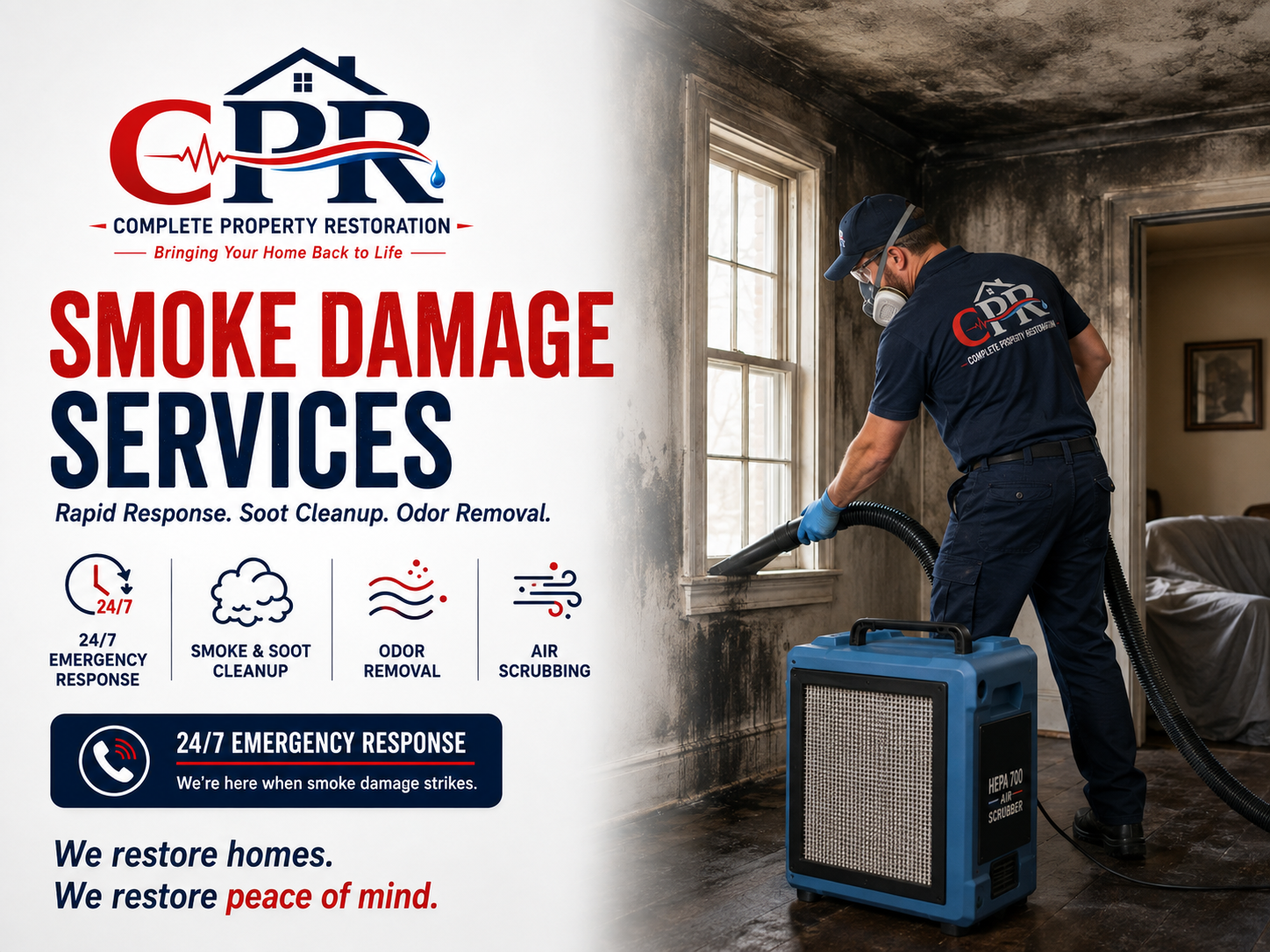
We isolate affected areas and run HEPA air scrubbers under negative pressure so cleaning doesn't redistribute particulate into clean parts of the house.
- 03
HVAC Shutdown & Decontamination
The system goes off immediately, and ductwork is cleaned and treated. Skipping this guarantees recontamination — and on a puffback it's the primary source, not a secondary one.
- 04
Contents Cleaning & Pack-Out
Belongings are inventoried and cleaned on-site or packed out for off-site processing, depending on residue type and severity. Textiles are handled separately from hard goods.
- 05
Surface Cleaning
Dry sponge, wet clean, solvent, or abrasive — matched to residue and substrate. Ceilings and upper walls first, working down, so we're not re-soiling cleaned surfaces.
- 06
Odor Removal at the Source
Remaining odor sources come out first. Then hydroxyl or thermal treatment for airborne and absorbed odor, and sealing of porous surfaces where residue can't be fully extracted.
- 07
Verification & Refinishing
We walk the property with you before closing out. Where surfaces can't be restored to pre-loss condition, we repaint, refinish, or replace as part of the scope.
Why Smoke Claims Get Underpaid
Smoke losses are undervalued more often than almost any other claim type, for one reason: the visible damage is a fraction of the actual damage. An adjuster looking at a kitchen with a scorched wall sees a small loss. The real scope includes every room the HVAC reached, the contents in them, and the ductwork itself.
We document residue presence beyond the origin room, record contents individually, and photograph the interior of the duct system. That converts an argument about whether the rest of the house was affected into an evidence question — which is a much better position for you.
We bill your carrier directly and handle the adjuster conversation ourselves.
- HEPA air scrubbersNegative air containment during cleaning
- HVAC & duct decontaminationRemoves the recontamination source
- Hydroxyl generatorsOdor treatment safe for occupied spaces
- Thermal foggingPenetrates odor into the same voids smoke reached
- Dry chemical sponges & solventsMethod matched to residue type
- Ultrasonic contents cleaningDetailed restoration of hard goods
Why Homeowners Call CPR
Built on Certifications, Not Commercials.
CPR was founded by Tim and Dana, who bring more than ten years in Texas real estate and property operations to every job — the judgment of an owner, not the script of a franchise.
Service Areas
CPR is dispatched from our home base in Spring, Texas and responds throughout the Houston metro and surrounding communities. Response times vary by distance — call and we'll give you a straight answer for your address.
Communities We Serve
Smoke Damage FAQs
Straight answers to what Houston-area homeowners ask us most.
There was no real fire — do I still need professional cleanup?
Usually yes, and this is the most underestimated loss type we handle. A contained kitchen fire or a furnace puffback can coat every surface in the house with residue that's barely visible but chemically active. Protein residue in particular discolors paint and varnish over weeks and produces an odor that returns every time humidity rises. If the smoke reached more than one room or went through the HVAC, surface cleaning won't resolve it.
Can I clean smoke residue myself with household cleaners?
We'd advise against it, and not because we want the work. Household cleaners are water-based, and applying them to wet smoke or protein residue emulsifies the oils and drives them into the finish permanently. The most common damage we're called to fix isn't the smoke itself — it's the streaking left by someone who tried to clean it first. If you do nothing else, don't wipe painted surfaces.
Why does my house still smell after everything was cleaned?
Almost always one of three things. The HVAC system wasn't decontaminated, so it's redistributing residue every cycle. A source is still present inside a wall cavity, in insulation, or under flooring. Or porous material was painted over without being sealed, and the odor is migrating back through. Odor treatment applied over an unremoved source is temporary by definition — the sequence has to be removal, then ductwork, then sealing.
My neighbor's unit burned, not mine. Is my damage covered?
Generally yes — smoke damage to your property is typically covered under your own homeowners or renters policy regardless of where the fire started, and your carrier may pursue the responsible party separately. In condos and townhomes there's usually an additional layer involving the HOA master policy for shared structure. Document your loss thoroughly and file with your own carrier promptly rather than waiting to see what the neighbor's insurance does.
Does the ductwork really need to be cleaned?
If the HVAC was running during or after the event, yes. The system pulls contaminated air in and distributes it to every room with a register, and the residue settles inside the ducts where it stays. Clean the rooms without decontaminating the system and the next heating or cooling cycle reloads them. On a furnace puffback the ductwork isn't a secondary concern at all — it's the origin.
How long does smoke cleanup take?
A single-room protein loss with light spread often runs three to seven days. Whole-house contamination with contents pack-out and duct decontamination commonly runs two to four weeks. Wet smoke and puffback losses take longer than dry smoke of similar size because the residue is harder to remove. We'll give you a schedule once we've identified the residue and walked the full extent of the spread.
Is smoke residue dangerous to breathe?
Smoke particulate and soot can irritate the eyes, throat, and respiratory system, and fine particulate is small enough to be inhaled deeply. People with asthma or other respiratory conditions, along with children and older adults, tend to be affected sooner. That's genuinely a medical question rather than a restoration one, so if anyone in the household is having symptoms, please talk to a doctor. On our side, we limit exposure by containing work areas, running HEPA filtration, and shutting the HVAC down on arrival.
Will my belongings have to leave the house?
Some of them, often. Hard goods and furniture can frequently be cleaned in place. Textiles, electronics, and heavily contaminated items usually process better off-site with specialized equipment. Anything we pack out is inventoried and photographed first so you know exactly what left and what condition it was in, and so your personal property claim is documented properly.